
If you want to book a trip to Lapland to see the Northern Lights, it’s ultimately about more than just checking something off your bucket list. It’s about that one night when the snow crunches under your boots, your breath hangs in the crisp cold air, and suddenly the sky above you comes to life. That’s exactly why, when planning your trip, it’s worth taking a closer look at what really matters to you—rather than just settling for any old package.
Booking a Northern Lights Trip to Lapland – What Really Matters
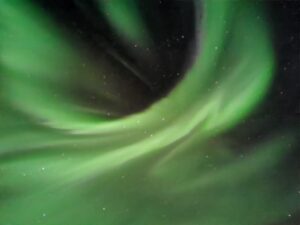
Many tours focus primarily on selling the image of a green sky. The truth is a bit more down-to-earth—and that’s exactly why it’s often better. The Northern Lights are a natural phenomenon. No one can guarantee they’ll appear. But what you can certainly influence are your chances of seeing them and the way you experience this trip—even if the aurora takes its time.
The biggest difference rarely lies in the brochure photo, but rather in the type of trip. Small groups, a guide with genuine local knowledge, and a location far from major tourist hotspots make a noticeable difference in Lapland. Anyone familiar with the region knows not only where it’s dark, but also when it’s worth moving to a different spot, how the clouds move, and which local conditions are often better than the weather app suggests.
In Swedish Lapland, in particular, this tranquility is part of the experience. You’re not standing in a parking lot surrounded by three tour buses, but in an open winter landscape; you hear almost nothing, and only then do you realize just how special an evening like this really is.
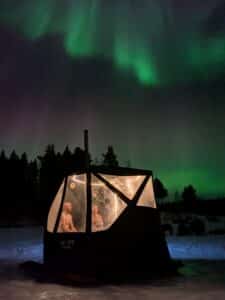
That’s exactly why I deliberately chose Arjeplog back then. Our Villa Björklund is located in the middle of a small village with just six residents. On clear winter evenings, many of our guests don’t even have to get on the bus. Often, all it takes is a step outside the front door to see the first northern lights right above the frozen lake.
The Best Time to Travel to Lapland
If you're traveling to Lapland to see the Northern Lights, the period from late September through the end of March is generally a good time to go. The classic peak season for many winter trips is between December and March. However, that doesn't automatically mean that every month will be equally suitable for you.
In early winter, the days often have a particularly atmospheric feel. Snow has already fallen, the landscape is bright and clear, and as the polar night sets in, that deep Nordic atmosphere—which fascinates so many—begins to take hold. At the same time, the days are very short. So if you want to experience not only the Northern Lights but also plenty of visible scenery, the period starting in February may be more appealing. That’s when the light slowly returns, the days get longer, and you get the best of both worlds—winter expanses by day and chances to see the aurora at night.
The period around New Year’s is also particularly popular. On our New Year’s Eve trip to Lapland, we ring in the new year far away from the noise of fireworks and crowds. Instead, the focus is often on the Northern Lights, snow-covered landscapes, and shared experiences in nature.
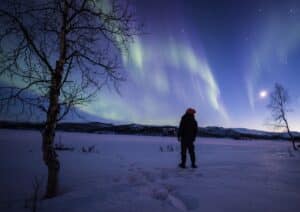
September and October are often underestimated. It’s not yet the depths of winter during this time, but the nights are already dark enough. Of course, you won’t have the snow-covered scenery that many people associate with Lapland. So it all comes down to what you’re looking for: Are you seeking the full winter experience with snow, saunas, and biting cold, or would you prefer the quieter transitional season?
When guests ask me when I would travel to Lapland myself, my answer is almost always: It depends on what you want to experience. For the classic winter wonderland with snow-covered forests, I recommend the months of December through March. On the other hand, for those who want to experience the changing seasons and combine the Northern Lights with a little more daylight, September, October, or even late March are incredibly beautiful times to travel.
It's not just the weather that matters, but also the location
Lapland is big. Very big. That’s why it’s a mistake to treat the region as a single dot on the map. When you book a trip, it’s not just the country that matters, but the specific location. Some places are easily accessible, but they’re also well-known and popular. Others are more remote and offer exactly the darkness and tranquility you’re looking for to fully experience nature.
Dark surroundings are a real advantage when it comes to the Northern Lights. Artificial light not only interferes with viewing, but also detracts from the overall atmosphere of the moment. An aurora sweeping across forests, frozen lakes, or open mountain landscapes has a different effect than one over hotel complexes and streetlights.
There’s also a practical consideration: When you have a local guide, you can react flexibly. It might be cloudy where you are, but 40 minutes down the road, the sky clears up. You can’t make those kinds of informed decisions when you’re traveling alone on a whim. This is exactly where the value of a small, guided group setting becomes apparent.
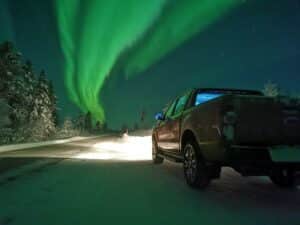
Why Smaller Groups Are More Effective
When planning a Northern Lights trip, group size might seem like a minor detail at first. But once you’re there, it’s not. In small groups, the trip remains flexible, relaxed, and personal. You don’t have to wait forever for everyone to get ready, and the evening doesn’t feel like just another item on the itinerary that you have to check off.
What’s more, the atmosphere changes. When you’re traveling with just a few people, you experience Lapland more intensely. There’s room for silence, for spontaneous stops, for a fire in the snow, or simply for looking up at the sky without the constant hustle and bustle. Especially when it comes to the Northern Lights, this isn’t a luxury—it’s part of the whole experience.
What Sets a Good Offer Apart from Any Other
If you want to book a Northern Lights tour in Lapland, don’t focus on superlatives first—focus on substance. You can tell a good trip by the fact that it doesn’t just promise the aurora, but builds a well-rounded Lapland experience. This includes the right location, honest communication, and activities that are still enjoyable even if the sky stays overcast.
A great travel package isn’t just about chasing the perfect photo. It combines nights of the Northern Lights with what truly defines winter in the North: silence, forests, snow—perhaps a husky tour, snowshoeing, ice fishing, or an evening in the sauna. You’ll find exactly this blend on our winter vacation in Lapland, where the Northern Lights are just one part of an immersive nature experience.
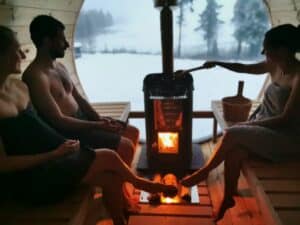
Another important consideration is the type of tour. Are you part of a standardized tour with 20 other people, or are you traveling with someone who lives in Lapland and shows you the region firsthand? This difference is hard to capture in a price list, but you’ll notice it right away once you’re out there.
Booking a Northern Lights Tour in Lapland—What Should You Expect?
The best expectation isn’t that the sky will explode every night. The better expectation is that you’ll find yourself in a landscape where such nights are possible—and that even the journey there is special. Those who travel with this mindset often take more away from Lapland.
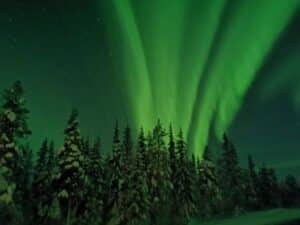
Some nights reveal only a faint, almost milky arc. Others remain still for a long time and don’t come to life until late. And sometimes exactly what you’d hoped for happens—green veils sweep across the sky, shapes shift, and suddenly the darkness no longer seems still. It’s precisely because it can’t be planned that it remains so impressive.
It helps not to think of the trip as an event, but as an immersion in a winter wonderland. Then even a cloudy evening by the fire, somewhere outside between a birch forest and a frozen lake, becomes part of the reason you came.
"Will there be northern lights tonight?" My personal experience
The question I hear most often from our guests in the winter is: “Will there be auroras today?” In fact, there’s no simple yes or no answer to that. As a first point of reference, I use the free “Aurora” app, which, based on our location, displays the KP Index—among other things—and thus the intensity of the aurora activity. That’s a good guide, but it’s by no means the whole story.

Cloud cover is just as important. That’s why I don’t just check the app—I first take our guests out in front of Villa Björklund and take a look at the sky. If there’s nothing to see there, we head out onto the frozen lake right in front of the house. There are no streetlights or distracting lights there. That’s often enough. And if conditions are even slightly better a little further away, we make a spontaneous decision and head out. That’s exactly the kind of flexibility I love about small groups.
But there’s one tip I always give my guests: Really go outside—don’t just take a quick peek out the window. The Northern Lights don’t stick to a schedule. Sometimes they’re visible for only five minutes before disappearing again. If you’re sitting comfortably indoors and only glance out the window now and then, you’ll often miss them.
That’s why it’s worth spending some time outside. When it’s very cold, many guests simply take turns or bring a thermos of hot tea. Since we provide our guests with warm winter coveralls and lined rubber boots free of charge, you can actually stay outside for a surprisingly long time, even at minus 25 degrees.
There’s something else that surprises many people: On the screens of modern smartphones, the Northern Lights often look much more intense than they do to the naked eye. The cameras automatically enhance the colors and brightness. But don’t let that disappoint you. The real experience isn’t the perfect photo—it’s standing under the starry sky on a clear winter night and watching as the sky suddenly begins to shift slowly.
Price, Comfort, and Experience—Where It’s Worth Making Compromises and Where It Isn’t
Of course, price is a factor. But when it comes to trips to Lapland, it’s worth taking a closer look at where the savings come from. A low price might mean you end up in a heavily touristed area, travel in large groups, or are stuck with a very formulaic itinerary.
Not everyone needs luxury. Many people visiting Lapland are looking for simplicity, nature, and a cozy, warm place to stay rather than a designer hotel and entertainment program. That, in itself, can be just the right fit. What you shouldn’t underestimate is the quality of your guide. An experienced guide who knows the weather, the region, and the rhythm of the North is often more valuable than any in-room amenities.
If you're traveling as a couple or with friends and looking for something unique, a private or very small, custom-planned trip might be a better option than a standard package tour. It's often more expensive, but it feels much more authentic because it's tailored to your pace.
How to Book Smart, Not Just Fast
The best trip usually doesn't start with a click, but with a few honest questions you ask yourself. Do you mainly want to see the Northern Lights, or are you looking for a full winter vacation with a variety of nature experiences? Do you prefer to travel in a small group or completely privately? How important are seclusion, comfort, and personalized guidance to you?
Once you’ve figured that out for yourself, a lot of things will become easier. Then you’ll quickly see which trip is right for you and which ones just sound good. Reputable providers communicate openly about what’s realistic, how your days there will unfold, and where their strengths lie. If you’re unsure which travel season or tour is right for you, just schedule a free consultation. I’ll set aside 30 minutes, and together we’ll figure out when your chances of seeing the Northern Lights are best and which trip is truly right for you—with absolutely no pressure to book.
Another consideration is the length of your stay. Three days can be enough if you just want to get away and are flexible. For example, we offer our Lapland short trips, which run from Friday to Monday. However, you’ll have a better chance of seeing the Northern Lights if you have a little more time. Staying for several nights takes the pressure off the trip and increases the likelihood of catching a good weather window.
Who Will Get the Most Out of This Trip
A Northern Lights trip to Lapland is a perfect fit for you if you want to not only see nature but also feel it. If you’d rather walk along a reindeer trail through a snow-covered forest than rush from one activity to the next. And if you can accept that the most powerful experiences in the North often happen precisely when not everything can be planned down to the last detail.
A trip like this isn't the best fit if you're looking for entertainment every minute or want to check off as many things as possible in the shortest amount of time. Lapland works differently. It's slower, quieter, and therefore often much more intense.
To wrap things up, here’s a personal thought from me: Even after many winters in Swedish Lapland, there are still those evenings when I step outside just to look up at the sky—and then end up staying out longer than I planned. Not because every night is spectacular. But because the landscape, the cold, and that act of looking up have a way of moving you all on their own. If that’s why you’re coming to Lapland, you’re not just booking the Northern Lights. You’re booking time in a world that’s quiet enough for a moment like that to have any impact at all. And it’s precisely that first glance upward that, time and time again, is the moment I look forward to every winter.

Michael has lived in Swedish Lapland for many years and founded AntsInPants Tours to give guests an authentic experience of the region, far from mass tourism. He plans the trips himself and makes sure that nature, activities, accommodations, and the pace of the trip all come together harmoniously. As a guide, he leads many of the tours himself and shares his experiences, tips, and insights into everyday life in the North here.