
Anyone thinking about hiking in Swedish Lapland for the first time often immediately pictures a grand scene: endless expanses, crisp air, birch forests, the fjäll, and reindeer on the horizon. It’s all true. And yet, the region isn’t a place for romantic misconceptions. Lapland rewards you with intense experiences of nature, but only if you take the landscape seriously and choose a hike that suits you.
That’s exactly what sets a good hiking trip apart from one that feels unnecessarily tough. Swedish Lapland isn’t spectacular because there’s a viewpoint waiting around every corner. It has a deeper impact. The vastness works its magic more slowly. Silence, light, and weather transform the experience from hour to hour. If you love being outdoors, are seeking tranquility, and don’t want to deal with crowded trails, this might be just the place for you.
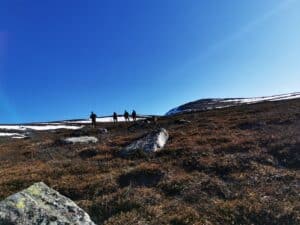
Hiking in Swedish Lapland is not like hiking in the Alps
Many people underestimate just how different hiking feels in the far north. The mountains are often gentler than in the Alps, but the conditions are unique. Trails can be narrow, rocky, wet, or completely unmarked. Add to that sections through bogs, wind on the plateaus, and distances that look harmless on the map but feel much longer out in the open.
In return, you get something that has long since become rare in many other regions: space. You don’t hike from hut to hut in a crowd. You hear water, wind, and sometimes—for days on end—almost nothing but your own footsteps. Especially if you’re used to a tightly scheduled daily routine, this makes a big difference. Your thoughts slow down, and your perception becomes clearer.
What I enjoy every single time I go hiking in Lapland is the water. I also hike in many other countries, where I often carry several liters of water with me. Here in Arjeplog, a small bottle is usually enough for me. Almost all the lakes and rivers have drinking-quality water. When the bottle is empty, I simply refill it from a stream or lake. For me, that’s what true luxury is: having to carry less and being able to drink crystal-clear water straight from nature while out and about.
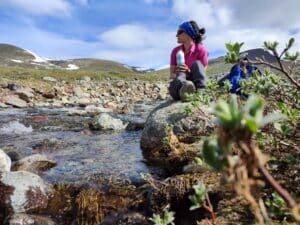
This type of hiking is especially well-suited for people who aren’t just looking to rack up kilometers or elevation gain. It’s less about showing off your athletic prowess and more about truly being outdoors. If you’re looking for an active vacation with depth, you’ll find a different pace in Lapland.
Which area is right for you?
Swedish Lapland is big. Very big. That’s why it’s worth taking a honest look at your expectations beforehand. Are you looking for marked long-distance hiking trails and classic multi-day hikes? Or would you prefer quieter day hikes with a base camp, a lodge nearby, and a local guide?
The most famous trail is the Kungsleden. It offers stunning scenery and is a dream destination for many. At the same time, it’s no secret during peak season. Those seeking complete solitude won’t always find it there. What’s more, the Kungsleden is no walk in the park. Changing weather, bridges, boat crossings, and long stretches are all part of the experience.
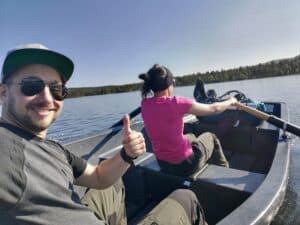
In addition, there are many quieter regions where you can often experience Lapland more deeply. The most memorable days often unfold around smaller towns, in river valleys, and in forest and mountain landscapes off the beaten path. Not because everything is more extreme, but because the experience is more immediate. You’re closer to nature and farther away from the tourist trappings.
That’s exactly why many of our hikes take place around Arjeplog rather than on the most famous trails. Often, we don’t see a single other person all day. Instead, we discover small lakes, old reindeer trails, or lookout points that aren’t listed in any hiking guide. For me, that’s exactly what makes Swedish Lapland so appealing.
That doesn’t mean, however, that we want to speak ill of the Kungsleden. Quite the contrary. It’s one of the most beautiful long-distance hiking trails in Scandinavia. We, too, hike there regularly with our guests. However, we prefer the southern section around Jäckvik, Adolfström, and Kvikkjokk. It’s much less crowded there than in the northern part, and you can often experience the Kungsleden in a more unspoiled and peaceful way.
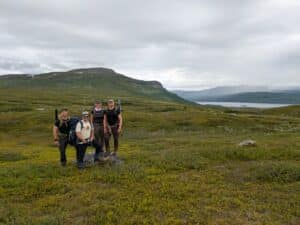
This is exactly what makes small, guided tours so appealing. Instead of just ticking off a route, you’re out and about with someone who really knows the area, can read the weather, and knows when an unassuming side trail is more worthwhile than the well-known main path.
For whom are day hikes better than trekking tours?
Not every trip to Lapland has to be a multi-day backpacking trip. On the contrary, many visitors experience the region more deeply on day hikes because they travel more lightly, can observe their surroundings more closely, and are better able to immerse themselves in the environment.
A trekking tour is a good choice if you have some experience, want to carry your own gear, and enjoy basic accommodations. Day hikes with fixed accommodations are a better fit if you want to immerse yourself in nature but also appreciate a sauna, good food, and a real bed in the evening. This isn’t a compromise—it’s often the better choice—especially if you’re looking for a true getaway in Lapland rather than a physical challenge.
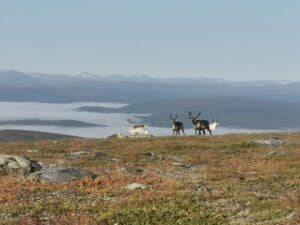
By the way, reindeer never fail to fascinate me. They’re often much more curious than many people think. On a hiking trip, I opened my tent one morning and there was a reindeer standing right in front of it. It was obviously just as interested in me as I was in it and just peered curiously into the tent. You can’t plan for moments like that. That’s exactly why they stay with you for so long.
If you're not sure which hike is right for you, feel free to contact me. During a no-obligation conversation, we'll work together to figure out which tour best suits your preferences. Not everyone wants to spend several days on the trail carrying a heavy backpack, and in Lapland, you don't have to.
The best time of year for hiking in Swedish Lapland
Hiking season is shorter than many people think. Roughly speaking, it begins in the summer and lasts into early fall. But these months feel very different.
In the height of summer, the days seem almost endless. The light lingers, and the landscape feels open and welcoming. Rivers often carry more water, the vegetation is lush, and you can spend an incredibly long time outdoors. At the same time, mosquitoes are a fact of life in certain locations and during certain times of day. How much you notice them depends on the weather, the location, and the time of year. You shouldn’t make a big deal out of it, but you shouldn’t ignore it either.
Late summer often brings a more peaceful atmosphere. The air becomes clearer, the colors slowly change, and many find this time of year particularly pleasant for walking. In early fall, Lapland reveals a depth all its own. Yellow birch trees, red tundra, and lower-angled sunlight—this isn’t a cheesy postcard scene, but a season with character. That said, the nights can get cold and the weather can become more unpredictable.
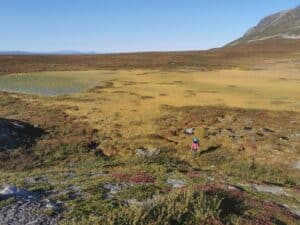
If you're flexible, it's worth planning your trip based on your travel preferences. Summer is ideal for maximum sunlight and long days. For more tranquility, vibrant colors, and often more pleasant conditions for running, late summer or early fall is often the better choice.
Not sure whether summer, late summer, or fall is the best fit for you? Then feel free to reach out to me. Together, we’ll explore—with no obligation—which hike and which season best suit your preferences.
What You Really Need—and What You Don't
When hiking in Swedish Lapland, a cluttered packing list won’t help—what matters is making sensible choices. Good, well-broken-in shoes are more important than the most stylish outdoor gear. Whether you need high-top or lightweight hiking boots depends on the terrain, your pack, and your balance. In marshy or wet areas, waterproof models are often comfortable, but on warm days they can also be too hot. There’s no one-size-fits-all solution.
Your clothing strategy is key. Wearing several lightweight layers works better than a single thick jacket for everything. Wind and changes in the weather can come on quickly. Even in good weather, be sure to pack a hat, rain gear, and a dry change of clothes. And yes, insect repellent can be worth its weight in gold.
By the way, I'm often asked which mosquito repellent I recommend. To be honest, for me, the best protection against mosquitoes isn't the spray at all, but long, loose-fitting clothing. That makes it much harder for the mosquitoes to reach your skin. I also almost always wear a cap.
As a supplement, I use a mosquito repellent with a high DEET content (about 40 percent), which is available at many pharmacies—for example, in Sweden, Germany, Austria, or Switzerland. I usually spray the repellent onto my hands first and then rub it into my skin. I also spray some on my cap and sometimes on my clothes as well. I’ve personally had very good results with this.
A quick note: Some mosquito repellents with a high DEET content can damage or discolor plastics or certain fabrics. That’s why it’s a good idea to read the manufacturer’s instructions beforehand and use the spray with care.
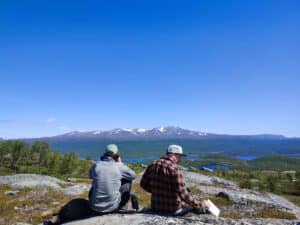
What many people forget: Time is part of your gear. If you approach Lapland with a schedule that’s too tight, you’ll only end up stressing yourself out. It’s better to plan less and leave some wiggle room for the weather, breaks, and spontaneous changes.
By the way, I always tell our guests that it’s better to bring one too many sweaters than one too few. The weather can change in the blink of an eye. Especially on the high plateaus, you’ll quickly realize how nice an extra layer can be. The well-known “layering” principle is also the best and simplest solution in Swedish Lapland—no matter what time of year.
Without a tour guide, or perhaps with a local guide?
Both are possible, but neither is right for everyone. If you have a lot of outdoor experience, know how to read maps, and want to explore on your own, there’s no reason not to plan your own trip in suitable areas.
A local guide is a good idea if you want to explore more deeply without having to worry about every potential hazard yourself. You’ll benefit not only in terms of navigation and safety, but you’ll also gain a better understanding of the landscape—why a valley looks the way it does, where animals often migrate, how the weather actually changes here, and which trails make sense to take today. That completely transforms the whole experience.
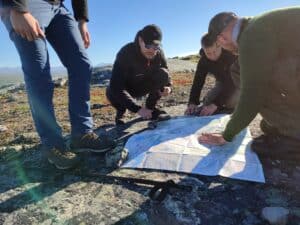
Especially in a region that’s so vast and sparsely populated, local knowledge offers real added value. Small groups are much more enjoyable than anonymous, run-of-the-mill tours. You’re not part of a caravan—you’re truly out exploring on your own.
The Most Common Mistakes in Planning
The first mistake is to treat Lapland the same as other hiking regions. Just because a hike in the Alps went well doesn't mean it will be the same here. Distances, infrastructure, and weather feel different.
The second mistake is letting yourself be dazzled by big names. Not every well-known route is automatically the right one for you. Sometimes the most memorable experience lies where fewer people go and the day isn’t already predetermined by outside influences.
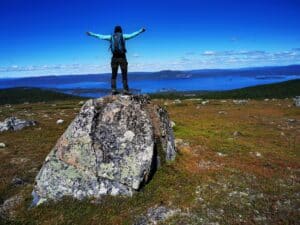
The third mistake is taking too athletic an approach to the trip. Of course, hiking can be challenging. But if you focus only on elevation gain, daily mileage, and performance, you’ll quickly miss what makes this region so special. Lapland reveals itself in the moments in between—along the riverbank, in the wind sweeping across the fells, in the long twilight hours when everything suddenly falls silent.
Why small, authentic formats are especially worthwhile here
In Swedish Lapland, you quickly realize whether a trip was planned from the outside or developed organically from within. Large-scale itineraries often sound convenient, but once you’re there, they seem surprisingly interchangeable. Fixed schedules, little flexibility, and hardly any room for the weather, the mood, or spontaneous decisions.
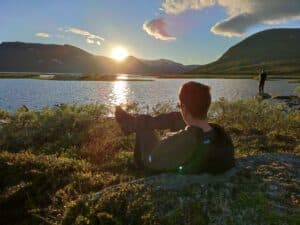
Smaller, personally guided trips are different. They leave room for whatever unfolds along the way. Maybe climbing a peak isn’t the best idea today—but a quiet valley bathed in light might be. Maybe the group doesn’t need a strict schedule, but rather a longer stop by the water. This freedom isn’t just a luxury. It’s often the reason a trip truly feels like a journey to Lapland.
If that's exactly what you're looking for, a tour operator like AntsInPants Tours is a natural choice—not because of flashy promises, but because small groups, local expertise, and authentic wilderness experiences are what set them apart.
A personal thought from Michael
What still moves me about hiking here isn’t any one spectacular moment. It’s more what happens after a few hours. You hear things differently. You look more closely. And at some point, you realize that this landscape isn’t trying to entertain you. It’s simply there—vast, silent, clear. That’s exactly why it stays with you for so long.
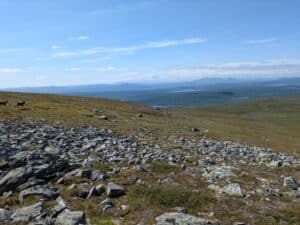
If you'd like to explore Swedish Lapland on foot and are looking for small groups, authentic local knowledge, and tours off the beaten path, feel free to contact me. Together, we'll find the hike that's just right for you.

Michael has lived in Swedish Lapland for many years and founded AntsInPants Tours to give guests an authentic experience of the region, far from mass tourism. He plans the trips himself and makes sure that nature, activities, accommodations, and the pace of the trip all come together harmoniously. As a guide, he leads many of the tours himself and shares his experiences, tips, and insights into everyday life in the North here.