
If you’re wondering when the best time is to visit Lapland to see the Northern Lights, there’s no one-size-fits-all answer. There isn’t just one perfect evening, but there are specific time frames when your chances are significantly better. And that’s exactly what matters if you don’t just want any old winter trip, but want to experience that one night when green light sweeps across the silent sky above you.
When Is the Best Time to Visit Lapland to See the Northern Lights?
In Swedish Lapland, the best season for the Northern Lights usually begins in late September and lasts until around early April. That sounds like a long period of time, but it feels very different when you’re there. That’s because the Northern Lights require not only activity in the sky, but above all, darkness.
For many travelers, the months from October through March are therefore the most exciting time of year. In September and early April, the light can still be—or already be—too bright, especially during the early morning and late evening hours. However, these times often have their own charm—more color in the landscape, less harsh winter cold, and a gentle transition between fall, winter, and spring.
If you want a specific answer to the question of when to visit Lapland to see the Northern Lights, the short answer is usually between November and March. During these months, the nights are long enough, the chances of seeing the Northern Lights are consistent, and you’ll experience Lapland exactly as many people imagine it: snow, clear air, biting cold, and a dark sky.
When guests ask me when I would personally travel to Lapland, I almost always respond with a question of my own: What would you like to experience? Would you like meters of snow, the Northern Lights, and the polar night? Or would you prefer longer days, more sunlight, and still a good chance of seeing the aurora? That’s exactly why, for me, there isn’t just one perfect time to visit. Every season has its own unique charm.
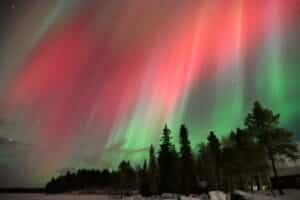
The best time to travel depends on what you're looking for
Not everyone has the same idea of what a Northern Lights trip entails. Some are primarily looking for the best chance of seeing the aurora. Others also want snow-covered forests, dog sledding, a sauna, and that typical winter feeling you see in pictures. Still others prefer milder conditions and less extreme temperatures.
November through January – dark, intense, wintry
If you want as much darkness as possible, the months around the turn of the year are ideal. The sky stays dark for a long time, the nights seem endless, and that’s exactly what creates the right conditions. Especially in December and January, you might get lucky as early as the beginning of the evening.
The trade-off is clear: the days are short, and there’s very little daylight. For many, that’s exactly what makes it magical. For others, it can be surprisingly intense. If you’re traveling to the far north for the first time, you should know that this darkness is beautiful, but also very unique.
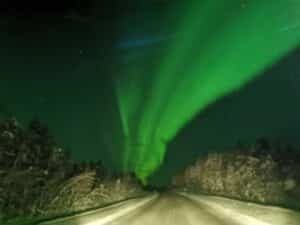
February and March—often the most balanced time of year
When someone asks me for a good compromise, I often suggest February and March. You usually still have a very good chance of seeing the Northern Lights, but you also get more daylight. That makes the trip more well-rounded overall. You can be active during the day and still have a real chance of witnessing a celestial spectacle in the evening.
On top of that, winter often feels at its most stable in February and March. The landscape is blanketed in deep snow, lakes and rivers are frozen, and the days bring that clear, cold light that makes Lapland so special. For many, this is the best time for a winter vacation in the north.
Personally, March is one of my favorite months. The sun is slowly regaining its strength; during the day, you can go on longer snowshoe, ski touring, cross-country skiing, or snowmobile trips, and at night, the chances of seeing the Northern Lights are still excellent. Many guests are surprised by how much daylight there already is.
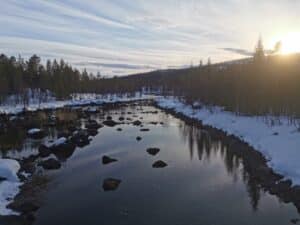
September and October—the early season with its own special atmosphere
The early season is often underestimated. The Northern Lights can be visible as early as the end of September, when the nights are dark enough. At that time, there is often little or no snow, and the landscape appears more open, more autumnal, and quieter.
This isn't the classic postcard version of Lapland, but that's exactly what makes it so exciting. If you don't need a purely wintery backdrop and enjoy experiencing the region in a more authentic and unexpected way, fall can be very appealing.
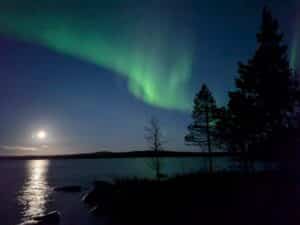
What's More Important Than the Month: Weather and the Sky
Even the best month won't do you much good if the sky is overcast. In practice, clouds are often the real spoilsport—not the lack of aurora activity. That's why the honest answer to the question of the best time to travel is always a little imperfect.
You might travel during the perfect time of year and have cloudy skies for three nights. But you might also arrive on an October evening and immediately witness a spectacular aurora. So if you’re coming to Lapland, you shouldn’t just wait for the spectacle—you should view the entire trip as an experience.
That’s exactly what sets an ordinary trip apart from a truly great Lapland experience. If you travel in small groups, stay flexible, and are accompanied by someone who lives here, your chances of being in the right place at the right time go up. Not because anyone can “order” the Northern Lights, but because local knowledge makes a real difference.
I’ve described in more detail in the article about booking a Northern Lights trip to Lapland how we decide on the spot whether to go in search of the Northern Lights, and what role apps, cloud cover, and experience play in that decision.
How long should you stay?
Two nights are often too short for a Northern Lights trip. Of course, you might see them right away, but if you want to realistically improve your chances, three to seven nights are much more relaxing. That’s why our trips usually last several days. Especially on our New Year’s Eve trip to Lapland, many guests see the Northern Lights not just once, but—with a little luck—on several evenings during their stay. This gives you more leeway when it comes to the weather and the sky.
This also has an emotional benefit. It frees you from the pressure of waiting. Instead of feeling pressured every evening, you allow yourself to immerse yourself more fully in the countryside—in the silence, the cold, the fire, the snow under your shoes. And that’s often exactly when the journey becomes more than just a search for a photo.
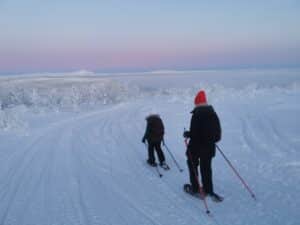
Full moon, cold weather, time of day—things many people misjudge
There are a number of persistent myths surrounding the Northern Lights. Not all of them are false, but some are overrated.
Extreme cold isn't a must. Clear, cold nights are often good because they can go hand in hand with stable weather. But the Northern Lights don't appear only when the temperature drops below minus 25 degrees. The key factors are darkness, clear skies, and solar activity.
Even a full moon isn't a deal-breaker. A bright moon can make weaker auroras harder to see, especially with the naked eye. However, strong auroral activity will still shine through. At the same time, the moon illuminates the landscape in a way that can make the entire evening seem almost unreal in its beauty.
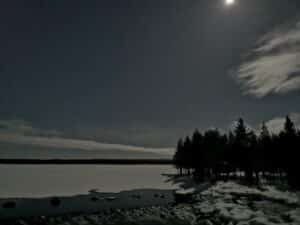
When it comes to the time of day, it’s best to keep an open mind. Many auroras appear between late evening and midnight, but there’s no hard-and-fast rule. Sometimes they start earlier, and sometimes not until nighttime. If you give up too soon, you’ll often miss the best moment.
Which months are best for which type of trip?
If you’re primarily interested in seeing the Northern Lights, November through March are your best bet. If you’d also like to enjoy plenty of winter activities and a bit more daylight, February and March are often particularly good months. If you’d like to experience the North in a quieter, more autumnal, and less traditional way, it’s worth considering late September and October.
For many travelers from the DACH region, it’s not just the chance to see the Northern Lights that matters, but the overall experience. And that’s where Swedish Lapland really shines. It’s not just about the glow in the sky, but about the hours before and after—out by the fire, on the frozen lake, in a quiet forest landscape free from the hustle and bustle and without busloads of people.
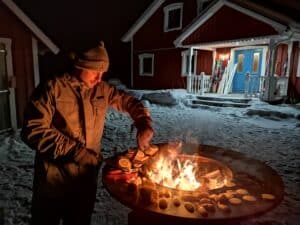
Especially if you ’re deliberately avoiding mass tourism, choosing the right time to travel is only part of the decision. The other part is how you travel. Small groups, genuine local knowledge, and enough flexibility are what make a trip a personal experience.
When is the best time to go to Lapland to see the Northern Lights if it's your first time?
For a first trip, I’d usually recommend February or March. Not because the other months are any worse, but because this time of year is the most accessible for many people. You get to experience winter at its best, but with a little more daylight and often a pleasant balance of daytime activities and stargazing in the evening.
On the other hand, if you’re looking for total darkness and love to immerse yourself deeply in the Nordic winter atmosphere, then December and January might be just right for you. Just be aware that this trip will be even quieter, darker, and more intense.
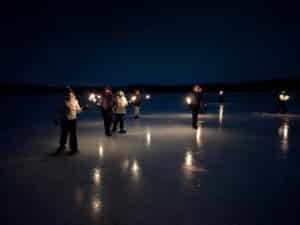
So it doesn't just depend on when the Northern Lights are likely to appear. It depends on what kind of Lapland you want to experience.
If you already know when you want to travel, check out my article on planning a Northern Lights trip for more tips on choosing the right trip and what to look out for when booking.
My honest recommendation from Swedish Lapland
Anyone who lives here learns quickly: You can’t plan for the Northern Lights, but you can create the right conditions for them. I’ve experienced nights when the sky remained calm for hours and then suddenly burst into green. And I’ve seen evenings that looked promising according to the forecast but were swallowed up by clouds.
That’s why I’d advise you not to plan your trip around just one natural phenomenon. Come for the vastness, the silence, the winter, and that special feeling of truly being out in the open. When the first bands of light appear above you, a beautiful evening will turn into something you won’t forget anytime soon.
If you want a real chance to see the Northern Lights on your trip but prefer to travel without large groups and without a run-of-the-mill itinerary, it’s worth taking your time and exploring Lapland at a leisurely pace. That’s exactly when the North often shows itself at its best.
If you're unsure which travel season best suits your preferences, feel free to schedule a free 30-minute consultation with me. Together, we'll explore which months, activities, and travel styles are the best fit for you and how you can maximize your chances of seeing the Northern Lights. There's no obligation, and no pressure to book.

And one more thing to wrap up this article: Sometimes the best evening doesn’t start with a spectacular show, but with a quiet, dark landscape where you simply wait. By the way, even after all these years, I still glance up briefly almost every evening. Not because I expect to see spectacular northern lights every time. But because every sky looks different. And for me, that sense of anticipation has come to be just as much a part of a winter evening in Lapland as crunching snow or a crackling fire.

Michael has lived in Swedish Lapland for many years and founded AntsInPants Tours to give guests an authentic experience of the region, far from mass tourism. He plans the trips himself and makes sure that nature, activities, accommodations, and the pace of the trip all come together harmoniously. As a guide, he leads many of the tours himself and shares his experiences, tips, and insights into everyday life in the North here.